
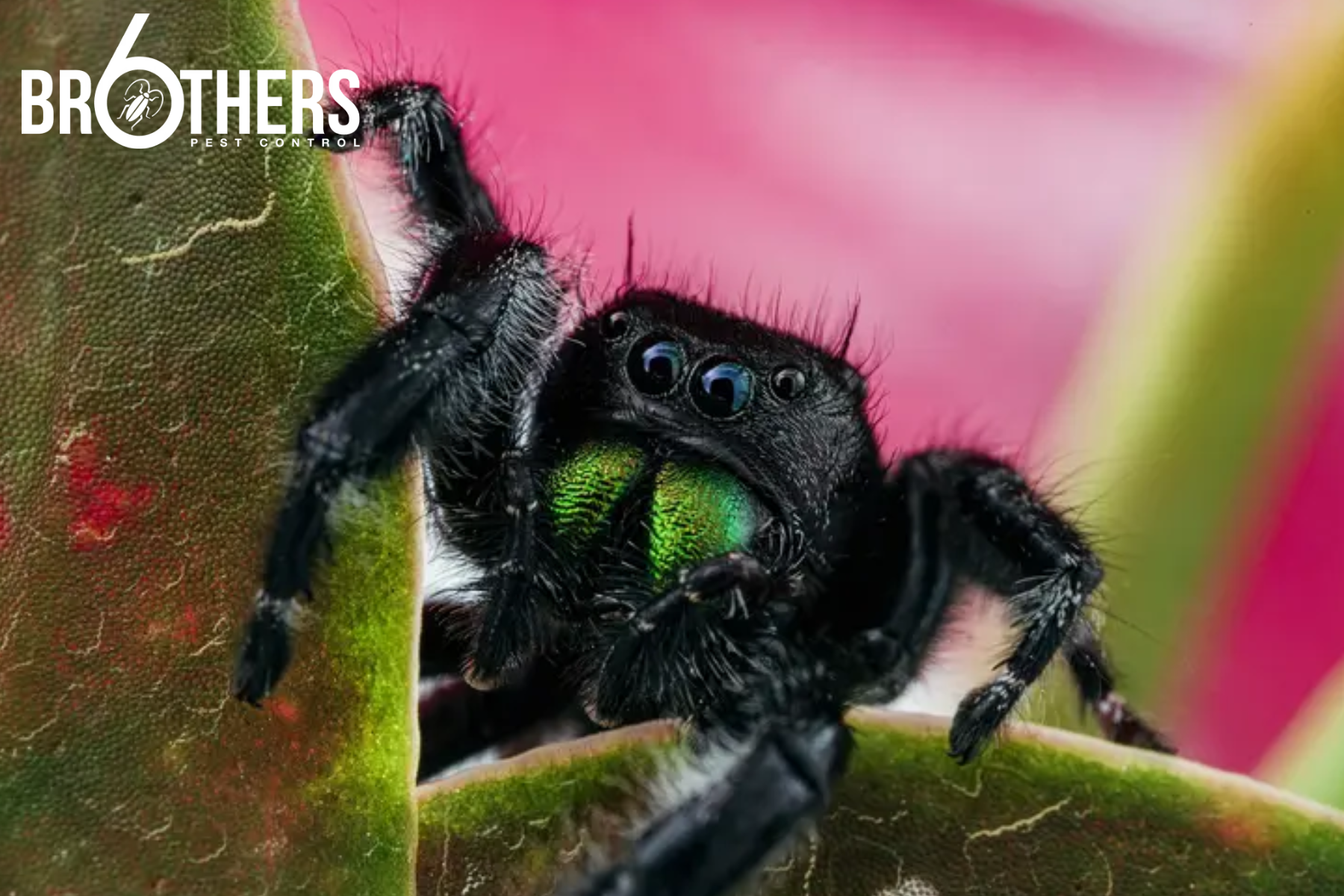
Jumping spiders are small, but they’re full of personality! These remarkable creatures are renowned for their agility and distinctive behavior, which frequently leaves humans in awe. While most people may be familiar with these spiders due to their impressive leaps from one surface to another, there’s so much more to them than just their jumps. In this blog post, we will delve into the fascinating behaviors of jumping spiders, address common concerns such as whether jumping spiders bite, and explore their intriguing interactions with humans.
What Are Jumping Spiders?
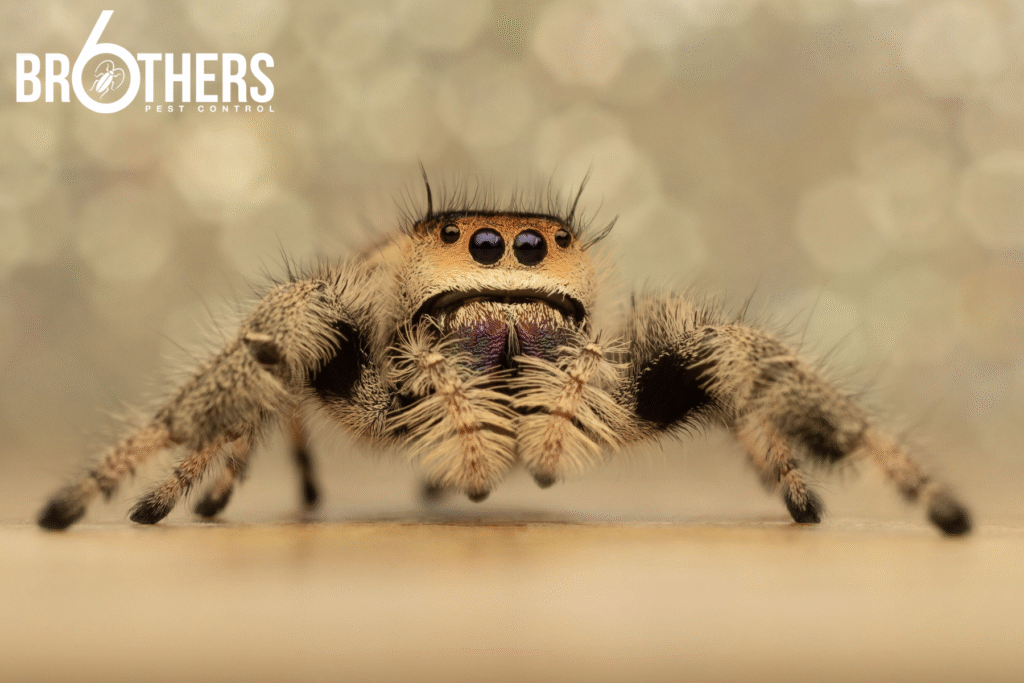
Jumping spiders belong to the family Salticidae, which includes more than 5,000 species worldwide. These spiders are often easily recognizable due to their large, forward-facing eyes and compact bodies. Typically, jumping spiders range in size from 1 to 2 centimeters, with a variety of colors and patterns that enable them to blend in with their surroundings.
What makes them stand out, however, is their distinctive ability to jump, which is a key aspect of their hunting and defense strategies. Jumping spiders use their superior vision to track prey and then launch themselves in precise, calculated leaps.
How Jumping Spiders Hunt
Jumping spiders are excellent hunters and are primarily carnivorous, feeding on small insects such as flies, ants, and even other spiders. Their hunting method differs from other spiders, which often use webs to capture prey. Instead, jumping spiders actively stalk and pounce on their prey, much like a cat hunting a mouse.
They are known for their keen vision, using their eight eyes to create a 360-degree field of view. The two central eyes, which are significantly larger than the others, provide them with exceptional depth perception and enable them to judge distances accurately. Once they spot their prey, jumping spiders slowly creep closer, then leap in a precise motion, landing directly on their target.
Their jumps can cover up to 10 times the length of their bodies, which is why they are named jumping spiders. After landing, they may use silk to anchor themselves in place, preventing their prey from escaping.
Do Jumping Spiders Bite?
A common question that arises when people spot a jumping spider is, do jumping spiders bite? While it’s possible for jumping spiders to bite, it is relatively uncommon. These spiders are not aggressive toward humans and will generally avoid interaction if given the chance. A bite may occur if the spider feels threatened, but even in these cases, the bite is typically mild and unlikely to cause harm.
Jumping spider bites can cause temporary pain, redness, and swelling, much like the bite of other common household spiders. In rare instances, some individuals may experience a more pronounced reaction due to an allergic response. However, for most people, the bite is not harmful and requires only basic first aid treatment. If a jumping spider bites you, clean the area with soap and water, apply ice to reduce swelling, and take over-the-counter pain relievers if necessary.
It’s also important to note that jumping spiders are not known to transmit diseases to humans, making them relatively harmless in comparison to other types of spiders.
Jumping Spiders and Human Interaction
Despite their small size and occasional bite, jumping spiders exhibit some fascinating behaviors when interacting with humans. These spiders are known to display curiosity, often approaching human observers, especially when they are in a calm or stationary position.
In fact, many people have reported that jumping spiders seem to “stare” at them. This is likely because the spiders are using their excellent vision to assess their environment, which includes determining whether the human in front of them poses a threat. If the spider feels safe, it may continue exploring its surroundings. If it feels threatened, it will likely scurry away to a safer spot.
Interestingly, jumping spiders are also known for their ability to recognize and react to their environment. They can become accustomed to familiar humans or environments and may exhibit more relaxed behavior after several interactions.
Webs and Shelter
Though jumping spiders are not known for creating large, intricate webs to catch prey, they still use silk for various purposes. For example, they produce silk to build shelters, which they use as hiding spots. These silk structures are often small and simple, and jumping spiders retreat to them when they feel threatened or need to rest.
These small silk shelters can be found in places such as cracks in walls, the corners of windows, or under leaves in outdoor spaces. In some cases, jumping spiders may use their silk to “anchor” themselves during a jump, ensuring they land safely after taking a leap.
How Long Do Jumping Spiders Live?
If you’ve ever wondered about how long do jumping spiders live, it typically depends on the species and environmental factors. On average, jumping spiders live for about one year, although this can vary. Their life cycle includes several stages: egg, larva, juvenile, and adult. In most cases, jumping spiders spend the majority of their life in the juvenile or adult stages, actively hunting and avoiding predators.
The lifespan of jumping spiders is often influenced by factors such as the availability of food, environmental conditions, and exposure to predators. Those that live in areas with abundant prey and fewer natural predators tend to live longer lives.
Jumping Spiders in the Home: A Concern?
While jumping spiders are not generally a threat to humans, they can still be a concern for homeowners. They may build their shelters in areas where they can become a nuisance, such as around windows, doors, or inside attics. Though these spiders do help control other pests by eating smaller insects, their presence may be unsettling for some.
If you find jumping spiders in your home and wish to remove them, the best course of action is to carefully relocate them outside. They are harmless creatures and can be beneficial to your ecosystem by controlling insect populations. However, if their presence becomes overwhelming, seeking help from a professional pest control Emmett Idaho service can ensure your home remains free of unwanted pests.
Preventing Jumping Spider Encounters
If you are concerned about jumping spiders in or around your home, taking preventive measures can help keep them at bay. Here are a few tips:
- Seal cracks and gaps around windows, doors, and other entry points to prevent spiders from entering.
- Maintain cleanliness in and around your home to reduce the number of insects that may attract jumping spiders.
- Regularly inspect your home for signs of spider webs or shelters, and remove them promptly.
If you find that jumping spiders or other pests are becoming a persistent issue, consider searching for spider control near me to find a professional service that can assist you with proper pest management.
About 6 Brothers Pest Control
At 6 Brothers Pest Control, we are committed to providing reliable, eco-friendly pest control solutions to protect your home or business. Based in Emmett, Idaho, we specialize in pest control Emmett services, including spider removal and prevention. Our team of experienced technicians uses green and safe pesticides to ensure the safety of your family and pets while effectively controlling pests. Whether you’re dealing with jumping spiders or other household pests, our team is here to help you maintain a pest-free environment.


